This article is based on a response I gave when someone asked me “Shouldn’t we ban assault rifles and large capacity magazines?”
Assault Rifles
Should we ban assault rifles? It seems like a pretty obvious starting point if we want “common sense gun laws”, right? No civilian needs an assault rifle.
Let’s look at some rifles. Which ones do you think should be banned?
A)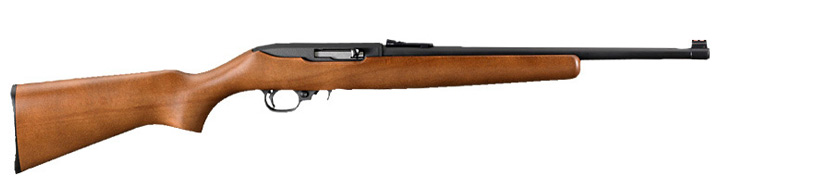
B)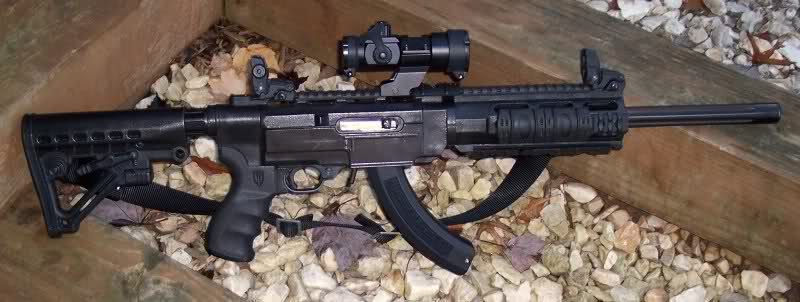
C)
Rifle A is a Ruger 10/22 – .22 caliber semi-auto, magazine fed rifle. Standard capacity magazine holds 10 rounds.
Rifle B is a Ruger 10/22 – .22 caliber semi-auto, magazine fed rifle. Standard capacity magazine holds 10 rounds. This one has a 25 round magazine that will fit rifle A just the same.
Rifle C is a Ruger Mini 14 – a .223 caliber semi-auto, magazine fed rifle. Standard capacity magazine holds 20 rounds.
A and B are exactly the same gun. The first one is “stock”, the other has replaced the wood with plastic of a different shape. It is one of the most common rifles in the US, and there are more after-market parts for it than perhaps any other gun in the world. You can make this gun look all kinds of wizz-bang crazy. But it’s still a Ruger 10/22, a semi-auto .22 caliber rifle. That’s the difference between an “Assault Weapon” and any other gun. One is black and has a military kinda look to it (sometimes referred to as “Scary Black Rifle” or “SBR”), the other doesn’t look as scary. So the idea of banning “assault weapons” is kind of silly. It’s really no different than banning custom paint jobs and hubcaps from cars. It does not change the car, it just changes the way it looks.
A and C are very different guns. Although Rifle A (Ruger 10/22) and Rifle C (Ruger Mini 14) look very similar, they are miles apart in terms of their lethal capabilities.
The 10/22 is designed for a cartridge known as the .22 Long Rifle, referred to simply as a “22”. It is the least powerful round in common use today. Due to the low power, it is not generally legal to hunt deer with this round, because it is likely cause suffering without causing death to the animal.
The Mini 14, on the other hand, fires a .223 caliber bullet. It is commonly called a “ranch rifle”, and indeed it is good for ranch use – coyotes, pigs, etc. It does not look as dangerous as rifle B, but it fires a significantly more powerful round. This round is approximately the same as the 5.56 NATO round used by the US military in the M16, and the common civilian AR15. (For a discussion of the two rounds, see here.) The typical .22 round is roughly 1/2 the size (by weight) and travels roughly 1/3 the velocity of the .223. The .22 has about one tenth the energy of the .223. So while the Mini 14 looks nearly as tame as the 10/22, they are very different beasts indeed.
You can get magazines for the Mini 14 that hold up to 90 rounds. If you wanted to ban guns based on how dangerous they are, this one is more dangerous than rifles A and B. It is more dangerous not because of the color or shape of the stock. It is not more dangerous due to it’s function – like the 10/22 it is a mag fed, semi-auto.
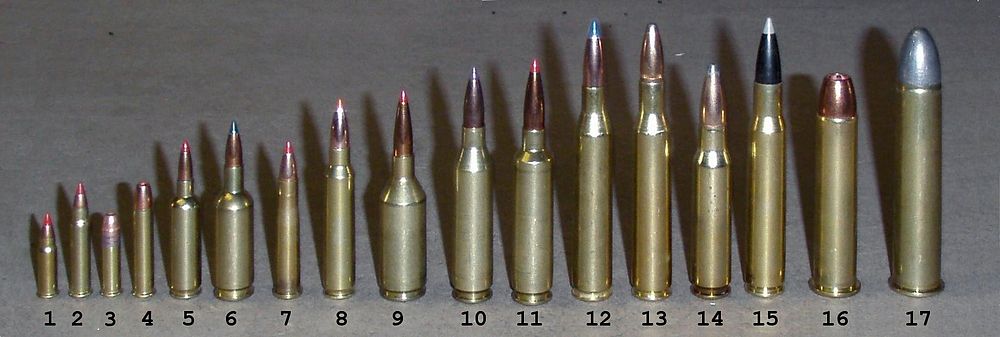
Number 3 in this photo is a .22 LR (fired from rifles A and B), and number 8 is a .223 Remington (fired from rifle C). If the Mini 14 is more dangerous than the 10/22, it is only because it fires a more powerful round. For the kinds of criminal activities that we are concerned with, both the .22lr and the .223 Remington will kill people. When it comes right down to it, what makes a gun dangerous is the intent of the person holding it, not the shape, color, or size.
Magazine Capacity
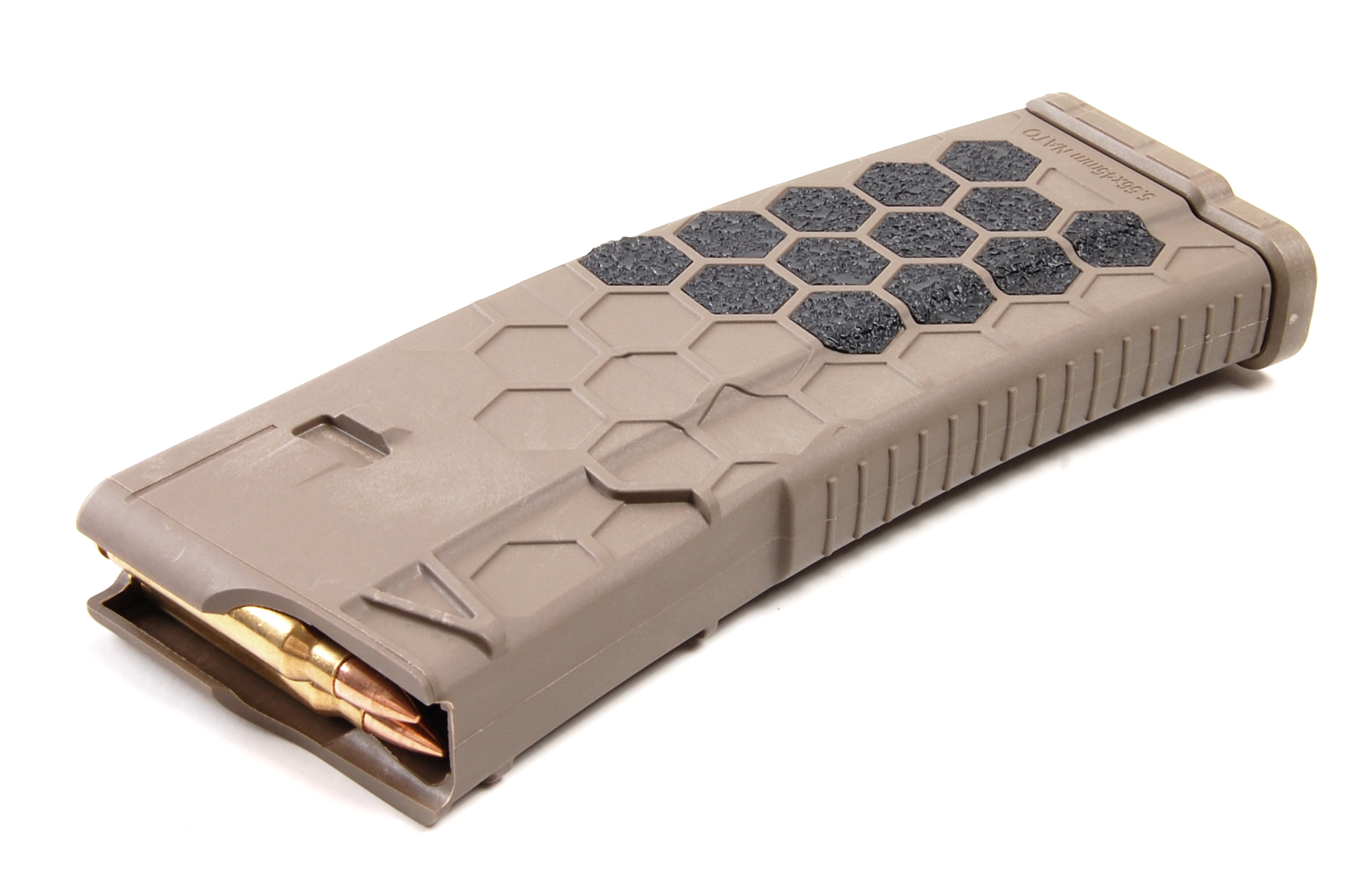
Until very recently, you could not buy factory magazines that held over 10 rounds for the 10/22, but you could buy larger third party mags. I’ve seen them up to 50 rounds. Ruger started selling a 25 round mag around 2015. Is the 10/22 more dangerous with 25 or more rounds in it?
Eh, maybe. If so, it is a matter of degree, and a tiny degree at that. You can swap out a magazine in a couple seconds. Without any skill at all, it might be a 3-5 second affair. I’ve seen some people who can change out magazines in under a second. The difference between 25 rounds in one mag, or 30 rounds in three mags is really negligible. Larger magazines tend to malfunction more frequently – you would be more dangerous with five 10 round mags than you would with one 50 round mag, just because you can recover faster from a malfunction. It is worth noting that the Virginia Tech shooter in 2007 fired 170 rounds from 17 magazines (that is, 10 rounds each), even though he was carrying both 10 and 15 round magazines. Unless you cut the maximum magazine size to 2 or 3, it just doesn’t buy much to put a limit on the size. If I thought that limiting magazine capacity was the way to make America safer from crazies, I would simply ban all rifles and handguns that have removable magazines.
There is nothing inherently more dangerous about a 30 round magazine than a 10 round magazine. So why does anyone need a large capacity magazine? Here’s a story to illustrate the reason.
A woman and her nine year old twins in Georgia were attacked in their own home (Georgia Woman Shoots Intruder). The attacker broke into the house, and when they hid themselves in a crawl-space, he hunted them down. What was his intent? We don’t know, but it can’t have been good. The woman had a revolver with 6 rounds. She shot the attacker, and hit him with 5 of the 6 bullets in the face. The guy still managed to stumble out of the house, get in his car, and drive off. (He crashed soon after, and was arrested.) What if there were two attackers? What if five? What if her aim was less accurate? What’s the right number of bullets to have in your gun when your family’s lives are at stake? I don’t know. Neither does any legislator.
In a situation where a bad guy with a firearm comes after unarmed innocents, the magazine capacity is not all that significant. He can carry several smaller magazines to make up for not having one large one. He’s got time to plan out his attack. No one is aggressing on him, he’s got time to reload. But when a victim is desperately trying to find a place to hide in their own house while protecting their children, needing to grab only one magazine vs two or three may be the difference between life and death. Since, by definition, someone is aggressing on them, they have less time to reload. In other words, large capacity magazines can be a big advantage to the good people trying to defend themselves, but are a very small advantage for the bad guys who are attacking.
Do We Need Guns At All
People say “we don’t need guns, we have the police to protect us”. This woman mentioned above was on the phone with her husband, and the husband had a second phone to his other ear talking with 911. The police didn’t arrive until after the woman had been driven into a corner and had to shoot to defend herself and her children. The bad guy had already fled the scene when the police arrived. The police get to a crime scene in time to clean up the mess, but almost never in time to protect the lives of innocent people. And if it weren’t bad enough that this is the tragic practical reality, it is also the legal precedent set by the courts. See Warren v. District of Columbia.
You may believe that the police will protect you from bad guys, but you won’t find many examples of that happening in real life.
Bottom Line
The bottom line on the specific question of “would I support banning assault rifles or large capacity magazines, the answer is a resounding “no”. There may be other solutions to reducing gun violence, but these two ideas won’t get us to that goal. Banning assault rifles, as I’ve demonstrated above, it is nothing more than a ban on an aesthetic. Scary looking, but no more dangerous than any other rifle. Banning large capacity magazines doesn’t do anything to protect anyone, but it hinders good people from protecting themselves.
Both issues are manufactured concepts that are promoted by people who know very little about firearms.